Archives for June 2008

Do You Really Want A Career In Heavy Equipment?

So you want a career in heavy equipment? How heavy? While we cannot promise you will ever get to operate one of these, and they require five operators to work the machine, we can at least get you started – just a little smaller perhaps.

Top speed for this beast is a leisurely 0.5 kph or 0.3 mph. If you get a flat battery I am not helping to push. Heavy equipment like this beast are used a lot in the mining industry, particulalry in open cut mines.

If you dream of driving heavy equipment then check us out at ATS Heavy Equipment Training Schools. We can’t promise to put you in the driving seat of a piece of heavy equipment like that – however a bulldozer or grader are a start.

Read more

Become A Professional Tractor Trailer Driver

During the past decade the demand for professional tractor trailer drivers has been the highest level for a great many years.

Skilled operators find jobs in all types of truck driving such as equipment transporting, dump trucks/trailers, sand and gravel, paving, concrete/asphalt, mining, freight haulers, construction materials and tankers to name just a few.

Benefits of joining the trucking industry may include the following depending on the positions available:

  • High income potential
  • Insurance
  • Retirement Benefits
  • Job Security
  • Owner/Operator Programs
  • Flexible Work Schedule

If you would like more information about the industry and to see if you qualify for one of these positions, then contact us at ATS Heavy Equipment Training Schools. Our training includes “hands-on” instruction in the equipment including backing and other close quarter maneuvers as well as pre-trip inspection, coupling and uncoupling and actual highway and city driving. A career in truck driving awaits you.

Read more

Bulldozer Don’t Just Push Dirt Around

To most casual observers, a bulldozer looks like a huge machine with a blade at the front that is used to push dirt around. They are partly correct. A bulldozer is used to push dirt around and it does a mighty good job too. But that isn’t the only job for a bulldozer.

With many bulldozers, have a look at the rear end. There you will find a massive pick. This is used to scrape the ground and loosen up the dirt. There is a real skill to using the pick – actually called a ‘ripper’.

The tool gets it name from the job it does – ripping up the ground to make it easier for the blade to get in and push away the dirt. Rippers are used when the ground is particularly hard. I can also be used to break up and drag out concrete and hard road surfaces.

Bulldozers that have a ripper attached are often duel controlled. Face the front to operate the blade and swing your seat around to face the rear and there you will find the rippers controls.

If you have a slightly destructive nature and like tearing things up, getting a job as a bulldozer operator may just the right career for you. You can break up the ground using the ripper then dozer out all the loose material.

ATS Heavy Equipment Training Schools can provide all the training required to get you started as bulldozer operator.

Read more

Heavy Equipment And The Art Of Motor Grading

Motor grading is a job that can sometimes be considered boring, you spend hours just driving up and down, skimming a little of the top at a time. The reality is that good motor grading is actually an art form and the best heavy equipment motor graders are those with many years experience.

With blade work, there is so much in the way of repetition, going over your work till you get it to the right grade. Sometimes it takes a lot of time. Even for some one with a lot of hours up is can seem boring and frustrating. That is the life of a heavy equipment operator.

Patience and a good eye and feel and being able to anticipate what the machine is going to do in advance is one of the special skills that is developed over time and with experience. Along the way you also learn where your material must be and where it will end up once you have completed each pass. With heavy equipment operation, a lot of the skill is your intuition and what you are feeling through your hands and feet. In a way, you become one with the machine, feeling the slightest imperfections in the surface through your hands.

While not wishing to be too hard on new heavy equipment operators some from this generation have not learned patience – and that is the main essential for all types of motor grading, no matter what machine you are on. If the job needs another one, two or three passes to make it tidy or right, then that is exactly how it is.

Over the years all heavy equipment operators learn and develop these skills. The art of motor grading lies in the hands. However, you need to learn the basics of heavy equipment and motor grading operations before you can even begin to learn the finer art. ATS Heavy Equipment Training Schools can give you that basic training to get you on the road to a great career. Check us out.

Read more

Don’t I Need Experience To Operate Heavy Equipment?

Of course you do – and training too – and we provide both. For an employer it is a catch 22 situation. They obviously want experienced heavy equipment operators, however if every employer took that attitude there would be no new blood coming into the trade.

Heavy equipment operators held about 416,000 jobs in 2002 and jobs were found in every section of the country and were distributed among various types of operators.

Job opportunities for heavy equipment operators are expected to be good through 2012 so new operators are constantly in demand. What is important is that what once you finish your training, you consider every job as an extension of that training – that is – you continue to learn on the job.

About three out of five heavy equipment operators work in the construction industry with many of them involved in heavy construction, building highways, bridges, or railroads. About one out of five Others – mostly grader, bulldozer, and scraper operators – work in mining. Some also work in manufacturing and for utility companies. Less than one in twenty construction equipment operators were self-employed.

With that information, it is obvious there is a call for skilled heavy equipment operators. The only way to gain those skills is through training at ATS Heavy Equipment Training Schools.

Read more

Do You Have A Head For Heights – Crane Operator Heights That Is

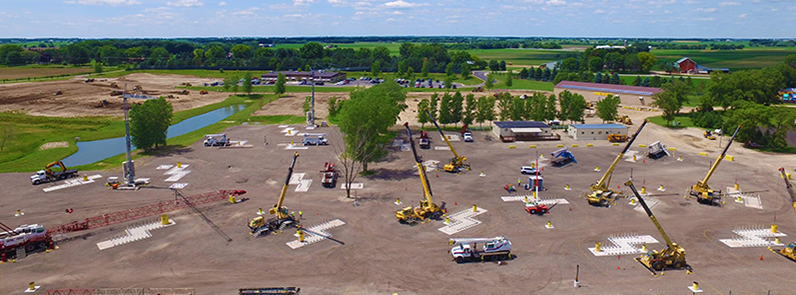
Crane operators move large and heavy materials and equipment. They may operate different types of cranes such as mobile and tower cranes. They are required to operate various types of cranes to lift, move and load large or heavy pieces of equipment or materials.

crane operatorOperators may also carry out routine daily maintenance of equipment. Crane operators must wear protective clothing such as a safety helmet, ear protectors and outdoor wear. As well as having a good head for heights, crane operators must be alert at all times.

As a crane operator you will need excellent judgment, a practical approach and good concentration. It is also vital to be safety conscious and teamwork is important. Mechanical skills are useful for the basic servicing of equipment.

You need to be physically fit as you must climb to reach the cab. In some cases this might be several hundred feet. You also need good eyesight.

To gain training to become a crane driver, visit ATS Heavy Equipment Training Schools for more information.

Read more

World’s Biggest Bulldozer – Heavy Equipment Operators Dream

If you have a dream of one day driving a piece of heavy equipment like a bulldozer, then feast your eyes on this beauty. You can see a photo of the unit at vincelewis.net.

This unit was built by the Italian Company Umberto Acco in 1980 however it has never been put to work. At 183 tons it certainly fall into the realm of heavy equipment. It is powered by two 675 HP Caterpillar engines, has a blade that is 23 feet wide and 9 feet high and a ripper at the rear that is over 10 feet in height.

You may never get to operate a piece of heavy equipment as large as this, however there are some large bulldozers around waiting for the right person to jump into the operators seat. Is that you?

If you are looking for a career as a heavy equipment operator then look no further. ATS Heavy Equipment Training Schools have the right courses to get you started – they also have career placement services as well. Your career starts with your first inquiry.

Read more

Interested In Your Own Heavy Equipment Business?

Once you get your qualified as a heavy equipment operator, and once you have several years experience under your belt, you may want to buy your own piece of heavy equipment and work as a sub contractor. That is quite possible but there are many pitfall to such an undertaking.

The first problem you will face is simply getting the work. There are times when you can submit a tender, however generally speaking you will need to apply directly to building contractors for work. The only way to secure any regular contracts is by building contacts. You will need to get your name out there as a reliable heavy equipment contractor – reliable in getting the job done, reliable heavy equipment and reliable in reporting and getting the paper work done.

The second problem you will need to consider is the lack of income during quite times or when your heavy equipment is ‘off the road’ for maintenance or repair. You need to learn to put aside in the ‘good times’ for the ‘bad times’. You also need to have a contingency plan in place in case your heavy equipment breaks down part way through a job. In these circumstances, you may well lose money (if you have to hire a vehicle), however your reputation is just as important and often worth the loss – you just need to be prepared for these events.

The final problem relates to the admin side of things. Most outdoor workers have little knowledge of bookkeeping and related issues. Can you produce invoices and statements when they are due. Can you manage your finances to cover heavy equipment loan payments, insurance, fuel and maintenance? Can you chase up outstanding payments without upsetting contractors (you may need them for future work)?

These are all issues that need to be considered when establishing your own heavy equipment business. And I have only touched on some of the issues. Other issues such as taxation and licensing also need to be considered. Compare all this to simply working your job and collecting a regular pay check. It is up to you and the rewards can be great when you are your own boss – just be sure to check it all through thoroughly.

Why not look into a heavy equipment school today and start on the road to self employment?

Read more

Three Skills Required To Be Called A Heavy Equipment Operator

It is easy to call yourself a grader operator, or a bulldozer operator. There are three areas of knowledge that are required to really call yourself a heavy equipment operator.

You have to know how to run the machine.
In other words, you need to know what all the levers do; how to make it move and function; go forward and backwards; how to turn. In simple terms: You need to know how to drive the heavy equipment.

You have to know how to work the machine.
Driving and working are two different things. Knowing how to move a blade up and down is one thing, knowing how far down and much earth will be cut is another. It takes skill and practice to understand exactly what your heavy equipment is capable of.

You need to know the dirt.
Once you know how to drive, and know how the heavy equipment works, you now need to know the dirt. How hard is it? How much effort will it take to move it? How much can I cut? If you try to do to much, you could damage the machine. If you do too little, you will take too long to complete the job.

These are three related heavy equipment skills that are essential to complete any job. Are you skilled in all three areas. If not then see call ATS Heavy Equipment Training School – we can help you gain those skills.

Read more