A naturally occurring radioactive gas, radon can affect all kinds of properties. It is colorless and odorless. It is also a serious health hazard. Prolonged exposure to radon can lead to lung cancer and other illnesses. It is actually the second leading cause of lung cancer.
As a construction worker, you should be aware that radon is created by the natural breakdown of elements in the soil. It can be found in water and igneous rock. Radon is a product that is created from radium to uranium. Radium then breaks down into radon.
A lot of new construction is being built using a radon-resistant approach. If a building tests positive for radon, a radon mitigation system can be installed.
Those who work in the construction industry can come into contact with radon in the workplace, so it is important to be attentive. Radon testing can help ensure the safety of the work crew. If there is radon in the area, you should take the proper action to ensure that it is safe to continue working at the job site.
OSHA has radon exposure limits for individuals in the workplace. Those limits are based on a 40-hour workweek and should be monitored and tracked and then properly reported.
While radon is something that you cannot see, it is a serious workplace hazard that requires the attentiveness of the whole team.
If you have concerns about radon, speak with an expert on the matter and make sure you have the proper testing protocols in place. Worker safety is essential in all aspects of the job.
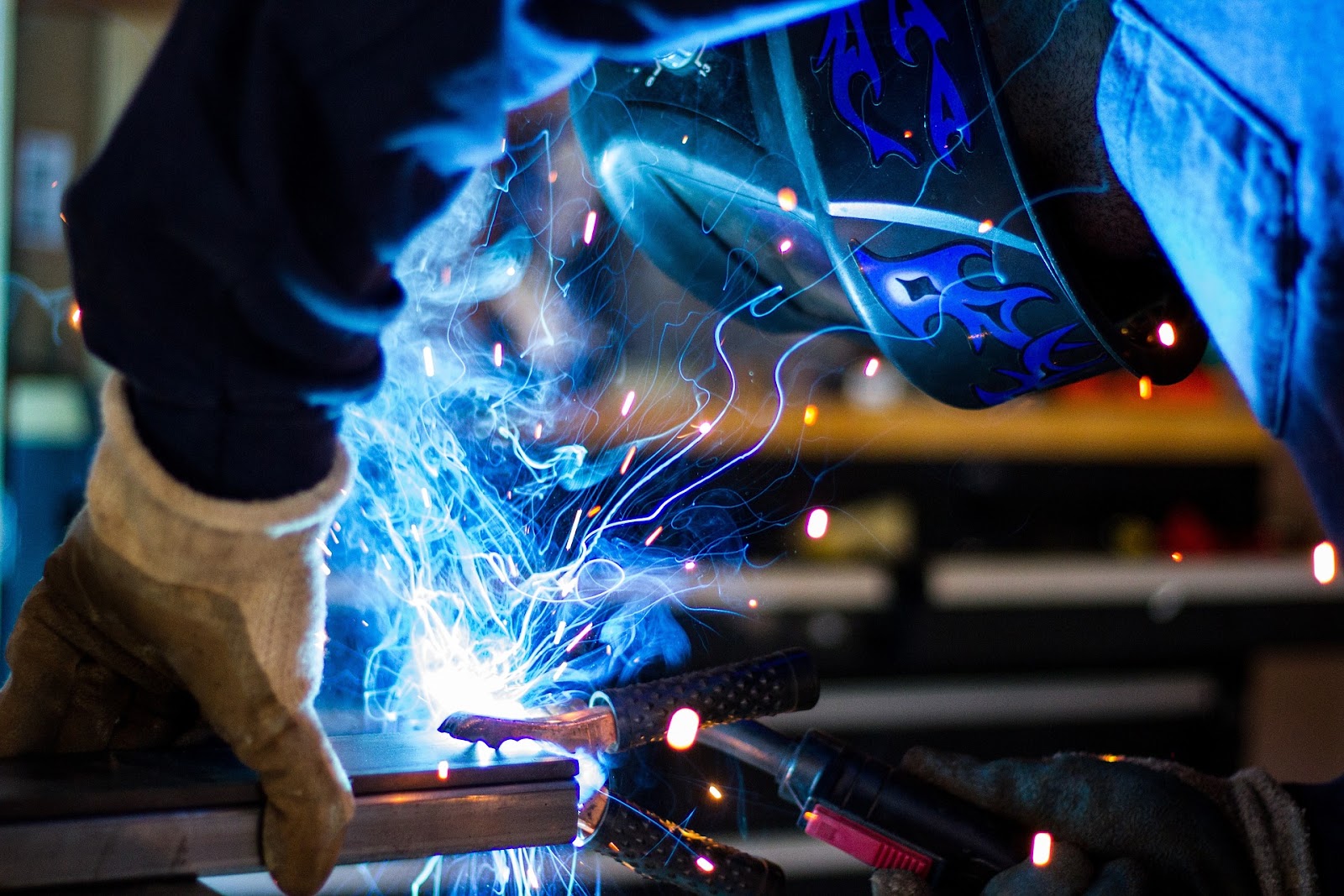
Learning how to weld can lead you to a fulfilling hobby or long-term career, but is incredibly dangerous when not performed correctly. We created this industry-professionally reviewed guide to provide all the safety basics in one place. Topics covered include:
The main hazards of welding and how they happen
Essential welding safety equipment and PPE
How to keep your workspace safe
OSHA requirements for welders
Essential Tips
Welding is a craft that has been honed in the last century, it’s a very useful trade to learn, and one that’s in high demand today due to critical construction workforce shortages. It’s a process that involves plenty of dangerous elements — electricity, fire, bright lights, and harmful gas emissions.
Getting burnt, being electrocuted, developing respiratory issues from inhaling hazardous fumes, and being blinded are all very real dangers. Keeping safe is of utmost importance if you value your life, quality of life, or limbs.
Read on for some welding safety tips to keep you safe while you work on your latest welding project.
Protect Yourself
Safety starts with wearing the right gear and protecting your most valuable assets – your eyes, ears, nose, hands, feet, skin, lungs, and limbs, of course. Here is a list of essential items to kit yourself out in:
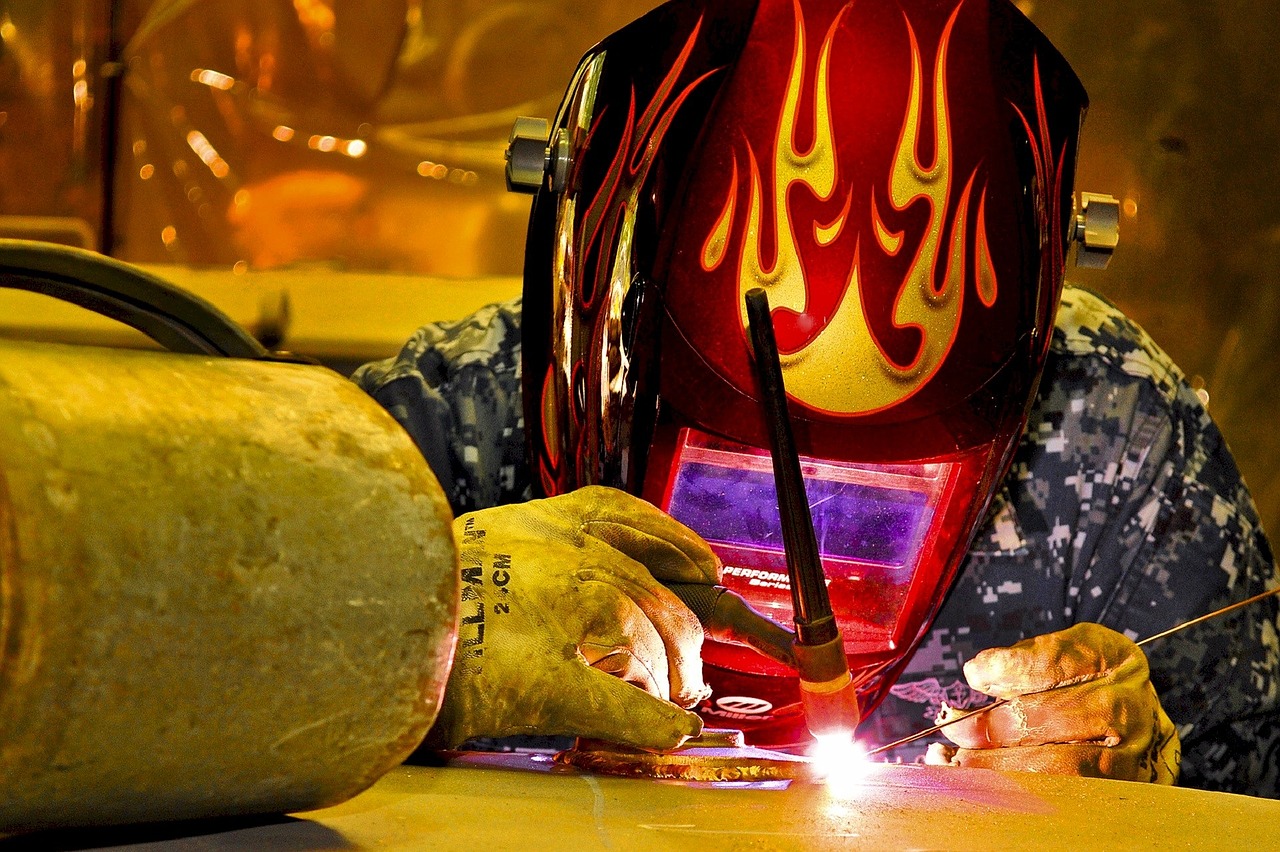
A welders helmet – newer versions now have lenses that adjust to light the same way that prescription sunglasses do so you can see what you are doing when you’re not welding without adjusting your helmet.
Leather boots – make sure to get ones with steel-reinforced toes and a rubber sole.
A heavy overcoat or shirt and apron – leather or fire-retardant canvas or fabric are the ideal materials for these to be made from.
Thick leather gloves, long denim or leather pants, and leather spats – the idea is to cover all of your exposed skin with a flame-resistant material to avoid any nasty burns to your skin from direct spatter or through your clothing catching on fire.
A welding skull cap – will protect your face, neck, and head where your welding helmet does not cover you. It should be flame resistant and cover the top of your head, the side of your face and your ears, your forehead, and the back and front of your neck.
An N95 or N99 mask for simple welding or an N100 mask for arc welding – using one of these while also practicing safe ventilation methods will drastically decrease your exposure to dangerous fumes.
When buying protective clothing, always choose the best quality items you can afford. Inspect each item regularly for damage and replace it if necessary.
Safeguard Your Workspace
Ventilate
Never weld in an area with inadequate airflow. If you are working indoors, make sure you are using a commercial-grade ventilation system or an adequate extraction hood.
Insulate
Make sure you are grounded. Never weld while standing on a wet surface or metal flooring. Wearing the correct gear also helps to insulate you from electric shock and electrocution.
Only allow trained professionals to perform maintenance and repairs on your welding equipment and make sure to test it regularly.
Fire-Proof
Spatter from welders can reach about 35 feet away from where you are working. Clear away any flammable items within this range to avoid starting a fire. If certain things cannot be relocated, cover them with a sheet of metal or a fire-retardant blanket.
You can also block spatter from items within range with non-flammable material.
Hydrate
Dehydration can cause fainting and dizziness. Keep hydrated while you work to stop an otherwise safe situation turning into an unfortunate accident. Plan to take regular cooling-off breaks or take one immediately if you feel dizzy or thirsty.
Prepare for the Unexpected When Welding
Read or re-read the manual before starting work to make sure you understand the operation of all the equipment you will be using.
Apply for a training course to hone your expertise If you’re an employer, consider sending your employees for a training course. There are even employer training grants available in the US for this.
Brush up on emergency protocol. If you don’t yet have a protocol, what are you waiting for? Map out different scenarios and write down what the necessary steps would be. This will help you to eliminate any forgotten hazards and procure any essential emergency, first-aid, and safety equipment that you might have previously overlooked. You’ll be calm and prepared for any situation, and this could save a life.
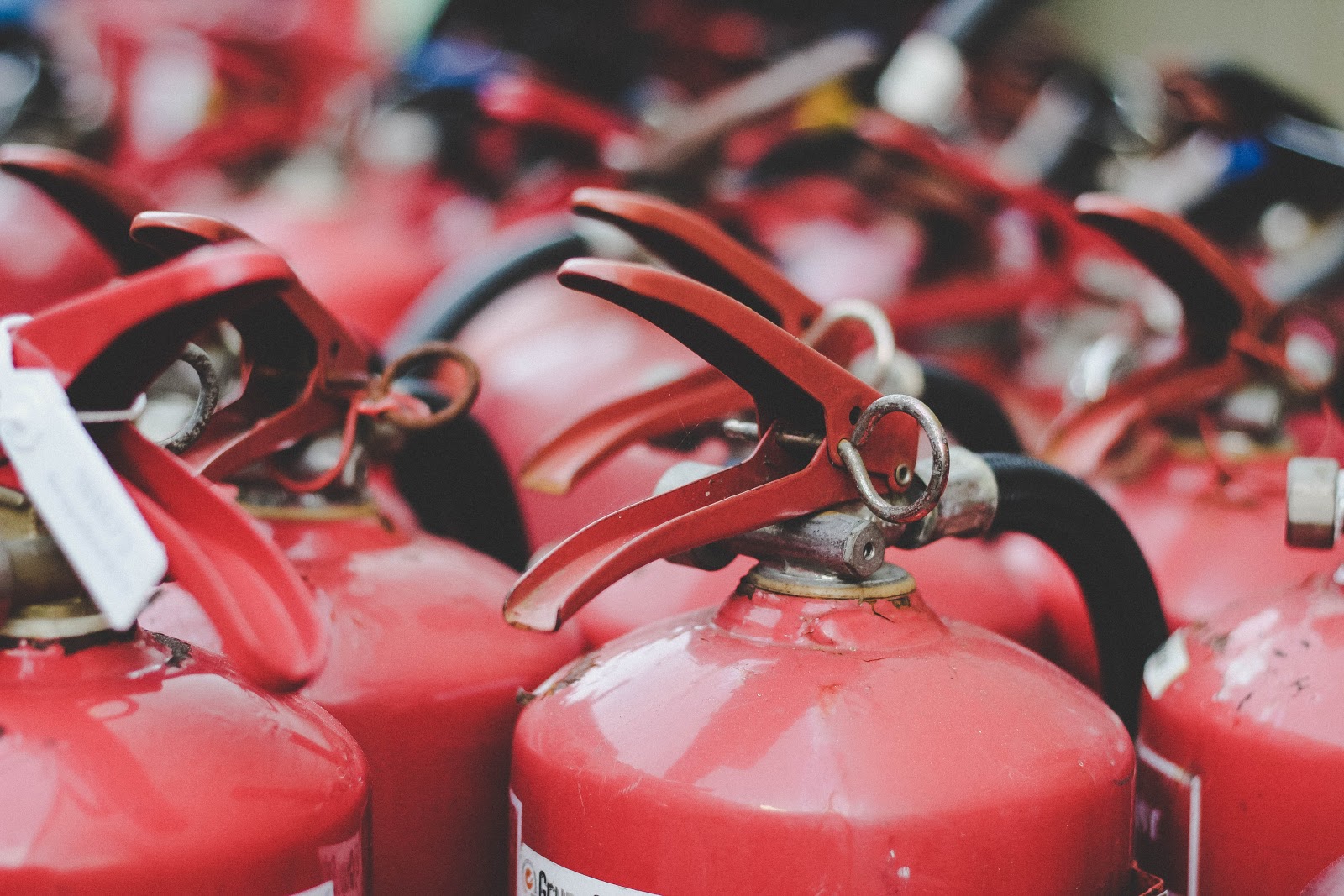
Keep fire-fighting equipment close by – fire extinguishers that have been inspected and are within their expiry date are a must. A hose pipe, sand buckets, a trough filled with water or wet blanket are also worth considering keeping readily available while you work.
Buy a first aid kit specially assembled for use in welding accidents and get accustomed to using the items in it.
Conclusion
The CDC’s NIOSH Hierarchy of Controls pyramid perfectly sums up the important practices for safety mentioned in this article, listed from most to least effective:
Elimination – physically remove the hazard.
Substitution – replace the hazard with something less hazardous.
Engineering controls – isolate people from the hazard.
Administrative controls – change the way people work around the hazard.
PPE – Protect the worker with personal protective equipment.
OSHA can fine employers, and those fines can add up quickly. If employees aren’t properly trained, or if there are PPE violations, OSHA can issue a citation for each employee violation. While not every case will warrant a per-employee citation, those fines and citations can be issued as the agency sees fit.
If your company doesn’t always have all its employees wearing their PPE, it can mean serious financial problems. As an example, the rule was enacted because a company hired 11 undocumented workers from Mexico. These employees were put to work handling asbestos, but they weren’t provided respirators.
At that time, before the regulation was enacted, OSHA wanted
to enact 11 different citations, but the court consolidated it into one single
citation. With the new rule, 11 citations would be 11 times the cost of one
citation.
Ensuring Employees Are Properly Trained
As an employer, you are responsible for making sure your employees have undergone popular training and have access to the required PPE. The violation could be financially devastating to your business, and it could cost you significantly in the long run because you could lose employees who have already been trained to do the job.
The cost of paying the OSHA fines and then hiring and retraining new employees can set your operation back significantly, so it isn’t worth the risk. You should make sure your employees have all the proper certifications and training so they will know how to handle their job duties and the proper safety protocol and procedures required for the job.
Proper Training
At Associated Training Services, we offer all the necessary certifications and training programs to ensure your employees understand the processes and know the requirements. Call us today to learn about the different training programs.
Trenching and excavation are among the most dangerous jobs, according to the United States Department of Labor. OSHA’s definition of excavation is any trench, cavity, depression, or cut that is man-made on the surface of the earth made by the removal of dirt. OSHA defines a trench as an underground excavation that has greater depth than width but isn’t any wider than 14-and-a-half feet. Important trench safety.
The Dangers of Working With Trenches
The greatest risk of working with trenches is cave-ins. When there is a cave-in, it is much more likely to lead to fatalities or serious injuries than other excavation accidents. Other hazards associated with trenches include falls and loads falling off as well as accidents that involve mobile equipment and its operation. Every year there are dozens of fatalities and hundreds of injuries from trench collapses.
Protecting Workers Around Trenches
No worker should enter a trench that isn’t protected. Trenches that are 5 feet deep or deeper must have a protective system unless it is made completely of stable rock. If a trench is 20 feet deep or more requires a protective system that is designed by a registered professional engineer or based on tabulated data that has been prepared or approved by an engineer.
Protective Systems
Different kinds of protective systems are used for trenches. Cutting back the trench wall at an angle that is inclined away from the excavation, sloping is an effective protective system. Another option would be shoring, which requires installing aluminum hydraulic or other supports to keep soil from moving and causing cave-ins. Workers are shielded using trench boxes or other supports to help prevent cave-ins. Designing a protective system for a trench can be complicated because multiple factors must be considered including the cut depth, the soil’s water content, soil classification, changes because of the climate or the weather, the materials that are going to be used inside the trench, and other activity within the vicinity.
Regular Inspections
OSHA standards require daily inspection of trenches by a competent individual who can identify any existing hazards, predict hazards, or determine if working conditions are hazardous, unsanitary or dangerous to the workers. This competent individual must be authorized to take corrective actions to either control or eliminate the hazards.
Safe + Sound Week was observed during August and the week was a time to celebrate the successes of workplace safety and health programs. Throughout the week, information was made readily available for other tips to help improve workplace safety.
The United States Department of Labor and Occupational
Safety and Health Administration (OSHA) believes that the annual event is
beneficial in many ways. Successful health and safety programs can identify and
manage workplace hazards so injuries and illness can be avoided. OSHA’s goal is
to improve sustainability and make safety the priority.
Many organizations have found participating in Safe + Sound Week can help get a safety program underway, bring new life to an existing program, or just offer companies the opportunity to recognize successful programs and employee efforts.
Who Should Participate?
All organizations who are needing an opportunity to
recognize their safety commitment should join in the annual event. During 2018,
more than 2,70 businesses participated and helped raise awareness about
workers’ safety and health. During 2019, almost 2,500 businesses signed up to
join the activities.
To learn more about the annual event, and to participate
next year, visit the OSHA website at https://www.osha.gov/safeandsoundweek/. You should plan year-round for safety and
implement the appropriate changes and programs to help encourage your employees
to safely and effectively handle all projects.
Every business should have a safety plan in place and have a
published list of safety protocol for all the different job roles in their
operation. Businesses who have such programs have much lower accident rates and
fewer injuries reported.
While accidents happen in all job roles, more construction workers are injured or killed on the job than those in other professions. According to the Laborers’ Health and Safety Fund of North America, the number of construction deaths on the job in the construction industry increased in 2016 based on Bureau of Labor Statistics data. There were 5,190 fatal on-the-job injuries in the U.S. in 2016, according to the Census of Fatal Occupational Injuries. That figure was a 7 percent increase over 2015. Of those deaths, 970 of them were in the construction industry.
When the figures were looked at more closely, the most common workplace accident that led to death was transportation accidents, which accounted for 40 percent of the fatalities. More workers were killed in transportation accidents than in any other work-related incident.
The second most common fatal event was violence that was caused by other people and/or animals.
Another shocking figure involved overdoses on the job. On-the-job overdoses increased 32 percent from 2015 totals. Fatalities that were tied to overdoses have continued to increase by at least 25 percent per year since 2012.
One of every five workplace death happens in the construction industry. When that is broken down, about 80 construction workers die every month in a workplace accident. When construction accidents were reviewed more closely, the leading cause of death for construction workers is falling. Of the construction workplace fatalities, 379 people died in falls during 2016, which was an increase from 348 in 2015.
While many construction workers interact with tools and heavy equipment on a daily basis, about one-fourth of the laborers killed in the construction industry were killed because of unintentional contact with machinery or equipment, such as cranes, grading machinery, backhoes, front-end loaders, forklifts, and aerial lifts. There were fewer transportation-related deaths in the construction industry, but there were more trench deaths – with the number climbing to 37 in 2016 from the previous year’s 26 deaths.
Construction Worker
Dies After Falling Down Shaft in Florida
According to Miami news stations, a construction worker died after falling down an elevator shaft while working on a building in Hallandale Beach, Florida. According to the news reports, the worker was working inside a large building being constructed in the vicinity of Southeast Third Avenue in Hallandale Beach on Friday, May 3, 2019, when he fell down the elevator shaft. This is why ATS teaches safety training.
According to the authorities who responded to the accident
scene, the construction worker was helping build an addition for the building
when he fell to his death. Police reports indicate that the fall was at least
10 stories. Hallandale Beach Fire and Rescue got help from the Broward County
Sheriff’s Fire Rescue in recovering the body of the construction worker.
Crane Collapse in
Seattle
On April 27, 2019, a construction crane that had been working on an office building for Google in Seattle, Washington, collapsed onto Mercer Street below. Four people were killed, and four others were injured. Many experts believe that the pins or bolts were prematurely loosened or removed from the crane and that made the crane’s vertical mast more vulnerable to the wind pressure that day, allowing the crane to topple. Many experts say the crane collapse was because of human error during the disassembling process.
In this case, it is believed that the workers prematurely
removed the pins that secured sections of the mast to one another, and that
caused the crane to topple. While sometimes workers remove the pins
prematurely, that practice doesn’t coincide with the instructions of the
manufacturer for the crane disassembly process. There is an investigation into
the incident, and five companies that played a role in the construction project
are being reviewed.
The Importance of
Safety at Construction Sites
Construction workers must adhere to safety training guidelines when working on construction sites. Many workers are injured on the job every year, and often, these injuries can be avoided when the proper safety gear is used, and the proper protocol are followed.
Excavation and trench work is the most hazardous construction operations. The Occupational Safety and Health Administration (OSHA) defines an excavation as any trench, cut, or cavity that is made by man. These depressions in the ground are made by removing the earth. A trench is a narrow underground area that has been excavated to be deeper than it is wide, but it cannot be wider than 15 feet. So why is trench safety so important?
There are dangers with any construction work, but when it
comes to trenching there is a risk that a cave-in could occur. Cave-ins could
result in the loss of life and are much more likely to cause fatalities than
any other excavation-related accident. There are many other risks, such as
falling loads, falls, and the risks of working with mobile equipment. There are
hundreds of workers injured and dozens killed by trench cave-ins every year.
Properly Protect
Yourself From Trench Collapses
Workers should never enter a trench that isn’t protected. Trenches that are at least five feet deep should have a protective system unless it is in solid rock that is stable. Trenches that are 20 feet deep require a protective system to be designed by an engineer or based on tabulated data that has been prepared and reviewed by a qualified engineer.
Many effective protective systems are used for trenches. Shielding uses trench boxes or supports to keep the dirt from caving in. Shoring involves the installation of aluminum hydraulics or other kinds of supports to stop cave-ins or the movement of dirt. Sloping is an approach that involves cutting back the trench wall at an angle that is away from the point of excavation.
The design of a protective system can be complex since there are a variety of factors that must be taken into consideration. The engineer must consider the soil classification, the depth of the cut, the soil’s water content, climate or weather changes, and any other operations in the area. OSHA requires that the trenches be inspected on a daily basis, and if there are problems that arise, they must be corrected by a competent individual who is trained to handle such problems.
Every course we teach includes a section that refers to safety on site, and it is something that is incredibly important for every heavy equipment operator, every day. However, part of that dedication to safety includes the clothes we wear, but what do you need to look out for to get the right safety clothing when on-site?
Boots
Having good boots is important, not only for protection but for comfort too, there is nothing worse than a pair of boots that hurt when you have a long day ahead of you. Steel-toed boots are of course essential, but also look for quality leather that will wear in and provide real comfort, good grippy soles are important too, and always ensure that the lacing is strong and sturdy too.
Gloves
The right gloves are a balance between protection and flexibility, you don’t want gloves that get in the way too much, as they just become annoying after a while, but very thin gloves don’t really offer enough protection. For winter, insulated gloves, especially those that use effective but light insulation such as Thinsulate, are a wise choice, and for all seasons, goatskin gloves provide strength and abrasion resistance without adding weight.
Safety Glasses
Glasses should be of the right kind, for instance, made specifically to fit over your ordinary glasses if you wear them. All glasses should conform to government safety standards.
Hard Hat
There are two things you need from your hard hat, that they conform to safety standards, and that they fit well. Fit is a personal thing, but make sure it’s comfortable to wear, it can become really annoying over a long period if it’s not.
Hearing protection
Again, make sure yours complies with regulations, and today many incorporate radio systems so that you can stay in contact with site supervisors.
High-Visibility Clothes
Having a high-visibility jacket is essential on most sites today, and it is something you shouldn’t ignore. It can be the difference maker and save you from disaster, especially on sites with multiple pieces of heavy equipment operating at the same time.
Finally, think about the rest of your clothing, you want to avoid anything particularly loose, as that has the potential to get caught in mechanisms, and make sure in the winter that you have appropriate warm clothing as needed. It may not always seem too cold, but after a day on-site it can creep up on you.
Fatal accidents within the heavy equipment and crane industry
Here is some important and scary information you should know and take into consideration when looking into the heavy equipment industry or the crane industry. No one expects to go to work and be unsafe, but within the heavy equipment and crane industries there will always be a certain amount of risk, due to the nature of the job.
Construction sites, mining facilities, and so on can never be completely controlled, and sometimes accidents do happen. In fact, fatal accidents are very rare, with the most recent government figures showing just 12% of fatal construction accidents being heavy machinery or crane-related. However, even with that level, it is important to understand how these accidents occur, so we can all avoid them in the future. Studies have constantly shown that one of the main contributors is operator error.
With operator error such a large contributor to the frequency of such accidents, it is an area that needs addressing by the industry. That is why training is so important today, and getting the right, hands-on training as close to a work environment as possible, really is essential for every heavy machinery or crane operator today.
At ATS we take safety seriously and work hard with our students, both in the classroom and out in the field to offer comprehensive training that not only prepares students for the job itself but the unpredictability of a construction site. With our unmatched industry expertise and unique training programs, we help our students master the work environment, spotting danger before it becomes a problem. They learn to operate under pressure while maintaining the highest levels of equipment and operational safety.
A good safety record can always be improved, and that is why we ensure our students are the best equipped to operate machinery and cranes as safely as possible. Get in touch today and see the difference that our safety-focused, mixed theory, and practical courses give to your confidence and ability on-site.