ATS was recently mentioned in the International Cranes & Specialized Transport magazine for March 2020. The article covers the latest news on the industry as well as what ATS offers for training and how we contribute to the skilled trades. Follow the link to the magazine and scroll down to page 15 to read the full article.
You can find out more about ATS and the training programs we offer by visiting www.operator-school.com or by calling one of our admissions representatives at (800) 383-7364.
MasTec, Inc., is an American leading specialty contractor. The company designs, engineers, and constructs infrastructure for oil and natural gas pipelines, electric power transmission and generation, turnkey solutions for water and sewer, specialized foundation construction, alternative-fuel power plants, solar energy facilities, wind farms, natural gas power plants, and much more.
The company employs more than 22,000 skilled professionals. MasTec has been in business for more than eight decades and has established itself as an industry leader. The company is a Fortune 500 company. The company headquarters are based in Coral Gables, Florida. The annual revenue was $4.208 billion as of 2015.
Company Subsidiaries
There are several company subsidiaries. Among those subsidiaries are Nsoro Acquisition LLC, MasTec North America Inc., Wanzek Construction Inc., QuadGen Wireless Solutions, Kingsley Constructors Inc., E Source Services LLC, Bottom Line Services LLC, Precision Acquisition Corporation, Big Country Energy Services LP, and more.
These subsidiaries are multinational contractors that build high voltage electric transmission lines, wind farms, oil and natural gas pipelines, and solar power facilities. The company is constantly hiring new team members. To work for MasTec, you must have undergone extensive training and have the skills that you need to perform the job professionally and productively.
Specialized Training
Associated Training Services (ATS), a family-owned and operated school since 1959, offers a variety of training programs, including heavy equipment training, NCCCO certified mobile crane training, NCCCO rigger level-I training, and HDD horizontal direction drilling training, and Class-A CDL training. Through career services, ATS works with MasTec. MasTec hires students who have participated in the various educational and training programs offered at ATS.
To learn more about ATS and the different training programs available, call (800) 383-7364. Financial aid is available, and ATS is a veteran-friendly school that participates in the GI Bill. ATS works with a variety of employers that offer individuals the opportunity to establish themselves in the industry and build lifelong careers.
We are in the midst of Winter 2020 and we are probably wondering what the economic outlook is for the U.S. throughout the year that lies ahead. According to Investopedia, the year ahead will continue with a hot trend, but it will not be blazing. This is because many companies received 2017 tax breaks, but those have now worn off and the U.S. – China trade war is on the path to being resolved.
Experts believe that the global economy will show signs of
improvement, and although the growth of China has slowed it is still growing at
a rate of more than 6 percent, which shows that the Chinese government is still
working to keep up a steady pace. The economies of those neighboring China are
expected to grow thanks to the slowing trade war and lower interest rates.
What Are The Chances Of Recession?
Financial experts don’t think a recession is likely in 2020 because all the leading economic indicators still have some power on standby. While industrial production and manufacturing have slowed, the resolution of the trade war with China will help boost corporate confidence. The U.S. consumer sees a healthy job market, lowered gas prices, and low inflation, and with economic expansions thriving, there is still a strong financial foundation for the year ahead.
Outside the U.S., though, there are some areas that are not as financially stable. For example, Germany is nearing a recession and if that does happen, it can affect the Eurozone and cause it to be pulled down. On the other hand, the U.S. jobs market is expected to stay strong, but it may not be quite as strong as it was in the last few years. Healthcare and services remain on solid ground and will keep the economy standing strong.
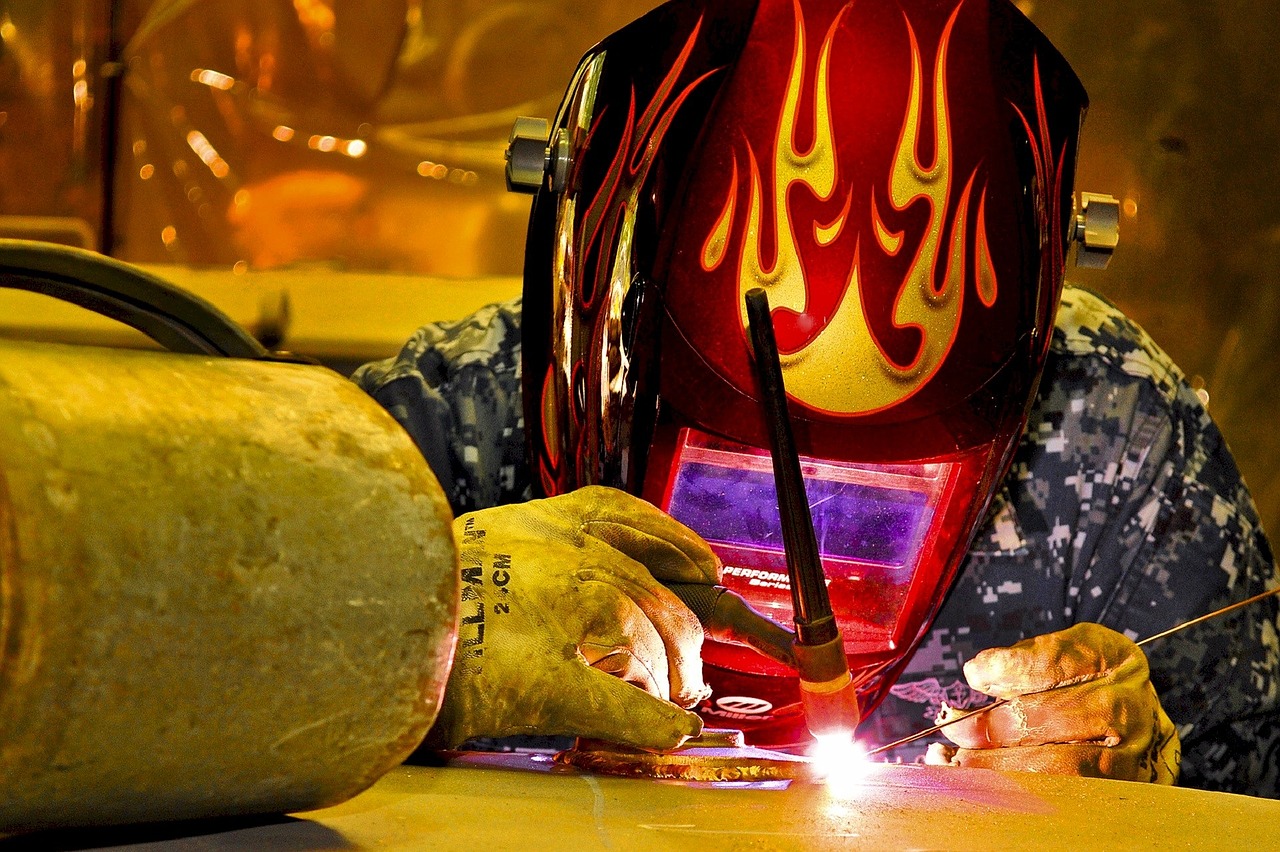
Learning how to weld can lead you to a fulfilling hobby or long-term career, but is incredibly dangerous when not performed correctly. We created this industry-professionally reviewed guide to provide all the safety basics in one place. Topics covered include:
The main hazards of welding and how they happen
Essential welding safety equipment and PPE
How to keep your workspace safe
OSHA requirements for welders
Essential Tips
Welding is a craft that has been honed in the last century, it’s a very useful trade to learn, and one that’s in high demand today due to critical construction workforce shortages. It’s a process that involves plenty of dangerous elements — electricity, fire, bright lights, and harmful gas emissions.
Getting burnt, being electrocuted, developing respiratory issues from inhaling hazardous fumes, and being blinded are all very real dangers. Keeping safe is of utmost importance if you value your life, quality of life, or limbs.
Read on for some welding safety tips to keep you safe while you work on your latest welding project.
Protect Yourself
Safety starts with wearing the right gear and protecting your most valuable assets – your eyes, ears, nose, hands, feet, skin, lungs, and limbs, of course. Here is a list of essential items to kit yourself out in:
A welders helmet – newer versions now have lenses that adjust to light the same way that prescription sunglasses do so you can see what you are doing when you’re not welding without adjusting your helmet.
Leather boots – make sure to get ones with steel-reinforced toes and a rubber sole.
A heavy overcoat or shirt and apron – leather or fire-retardant canvas or fabric are the ideal materials for these to be made from.
Thick leather gloves, long denim or leather pants, and leather spats – the idea is to cover all of your exposed skin with a flame-resistant material to avoid any nasty burns to your skin from direct spatter or through your clothing catching on fire.
A welding skull cap – will protect your face, neck, and head where your welding helmet does not cover you. It should be flame resistant and cover the top of your head, the side of your face and your ears, your forehead, and the back and front of your neck.
An N95 or N99 mask for simple welding or an N100 mask for arc welding – using one of these while also practicing safe ventilation methods will drastically decrease your exposure to dangerous fumes.
When buying protective clothing, always choose the best quality items you can afford. Inspect each item regularly for damage and replace it if necessary.
Safeguard Your Workspace
Ventilate
Never weld in an area with inadequate airflow. If you are working indoors, make sure you are using a commercial-grade ventilation system or an adequate extraction hood.
Insulate
Make sure you are grounded. Never weld while standing on a wet surface or metal flooring. Wearing the correct gear also helps to insulate you from electric shock and electrocution.
Only allow trained professionals to perform maintenance and repairs on your welding equipment and make sure to test it regularly.
Fire-Proof
Spatter from welders can reach about 35 feet away from where you are working. Clear away any flammable items within this range to avoid starting a fire. If certain things cannot be relocated, cover them with a sheet of metal or a fire-retardant blanket.
You can also block spatter from items within range with non-flammable material.
Hydrate
Dehydration can cause fainting and dizziness. Keep hydrated while you work to stop an otherwise safe situation turning into an unfortunate accident. Plan to take regular cooling-off breaks or take one immediately if you feel dizzy or thirsty.
Prepare for the Unexpected When Welding
Read or re-read the manual before starting work to make sure you understand the operation of all the equipment you will be using.
Apply for a training course to hone your expertise If you’re an employer, consider sending your employees for a training course. There are even employer training grants available in the US for this.
Brush up on emergency protocol. If you don’t yet have a protocol, what are you waiting for? Map out different scenarios and write down what the necessary steps would be. This will help you to eliminate any forgotten hazards and procure any essential emergency, first-aid, and safety equipment that you might have previously overlooked. You’ll be calm and prepared for any situation, and this could save a life.
Keep fire-fighting equipment close by – fire extinguishers that have been inspected and are within their expiry date are a must. A hose pipe, sand buckets, a trough filled with water or wet blanket are also worth considering keeping readily available while you work.
Buy a first aid kit specially assembled for use in welding accidents and get accustomed to using the items in it.
Conclusion
The CDC’s NIOSH Hierarchy of Controls pyramid perfectly sums up the important practices for safety mentioned in this article, listed from most to least effective:
Elimination – physically remove the hazard.
Substitution – replace the hazard with something less hazardous.
Engineering controls – isolate people from the hazard.
Administrative controls – change the way people work around the hazard.
PPE – Protect the worker with personal protective equipment.
OSHA can fine employers, and those fines can add up quickly. If employees aren’t properly trained, or if there are PPE violations, OSHA can issue a citation for each employee violation. While not every case will warrant a per-employee citation, those fines and citations can be issued as the agency sees fit.
If your company doesn’t always have all its employees wearing their PPE, it can mean serious financial problems. As an example, the rule was enacted because a company hired 11 undocumented workers from Mexico. These employees were put to work handling asbestos, but they weren’t provided respirators.
At that time, before the regulation was enacted, OSHA wanted to enact 11 different citations, but the court consolidated them into one single citation. With the new rule, 11 citations would be 11 times the cost of one citation.
Ensuring Employees Are Properly Trained
As an employer, you are responsible for making sure your employees have undergone popular training and have access to the required PPEs. The violation could be financially devastating to your business, and it could cost you significantly in the long run because you could lose employees who have already been trained to do the job.
The cost of paying the OSHA fines and then hiring and retraining new employees can set your operation back significantly, so it isn’t worth the risk. You should make sure your employees have all the proper certifications and training so they will know how to handle their job duties and the proper safety protocol and procedures required for the job.
Proper Training
At ATS Specialized Training School, we offer all the necessary certifications and training programs to ensure your employees understand the processes and know the requirements. Call us today to learn about the different training programs.
If you are looking to advance your career, get started in a new field, or just for a new job, you can benefit from career services. Career Services offers a variety of services and can be a great deal of help to students at different schools, including those who are undergoing specialized training.
What Can Career Services Do For Me?
Career Services offers a variety of services to help you during your job hunt. They host job fairs, post job openings, help with resumes and applications, and host employers who need to recruit students who are nearing graduation. Career services can even help you properly plan and choose a profession that best suits your interests and needs.
A counselor with career services can help you choose the right field of study. This is true if you have a career that you are interested in or if you don’t have any idea as to what you want to do with your life. They can use self-assessment processes to take a look at your values, interests, personality, and abilities. They will then go over your possibilities and help you – based on the assessment results – figure out suitable options for a career.
They can also help you with your resume and with writing
cover letters so you can make a good first impression and get called for an
interview. They can also help you prepare for an interview, so you can present
yourself well and so you will know how to properly respond to the questions and
show the interviewer your strengths and capabilities. Mock interviews can take
you farther in the job application process.
Take Advantage Of This Help
You should take advantage of the services available from the career services team at your school. That way, you can find opportunities in your chosen field upon graduation.
We have all heard the horror stories of being the only woman employed by a company or the only female at a job site. In these situations, women sometimes are mistreated, and there are reports of some companies not even offering these women a restroom they can use while on the job.
According to the Bureau of Labor Statistics, women comprised only 10 percent of the construction workforce across the U.S. in 2018. The Office of the New York State Comptroller reported that 43,500 construction jobs were added in the state’s construction sector from 2010 to 2018, which was a 40 percent growth. But, despite the growth in the field and the increase in jobs, the percentage of women in the construction workforce has leveled off – seeing only 3 percent growth from 2007 to 2017, they reported.
However, many of the women who have chosen to enter the construction field have excelled in their profession and recommend the field to other women. With determination, hard work, and proper training, the construction industry offers excellent opportunities for a successful career for women as well as men.
Tips for Women Entering the Construction Industry
If you are a woman interested in a career in the construction industry, you should learn from the best. Here are some tips:
The first step in a successful career is to make
sure you learn from experienced professionals. You want to start your job
knowing how to safely and accurately handle the tasks.
You should be confident, and don’t let anyone
put you down or talk you down. After training, you are heading to the jobsite
just as qualified as anyone else out there.
Don’t hesitate to ask questions. Take the time
to expand your knowledge and get a holistic view of the construction industry.
Don’t be afraid to seek the skills that you want
so you can take on other roles.
If you are ready to switch to the construction industry, call ATS (800) 383-7364.
OSHA safety training is a necessity in many job roles. There are specific training requirements for employers, and they must make sure their employees are familiar with the safety regulations and the OSHA requirements.
OSHA requires that employers provide the appropriate training to any workers who face hazards while on the job. Authorized education centers, including Associated Training Services (ATS).
Many jobs require OSHA certification, so they can safely handle their job duties without putting themselves, coworkers, and the general public at risk.
Kinds Of OSHA Safety Training
While some workers are required to undergo OSHA safety training, most workers can benefit from it. The specific training requirements and programs are determined by the worksite or the employer.
These requirements are unique to the job sites and the different hazards the employee will face. In most cases, employers use a 10-hour or a 30-hour OSHA outreach training program as the baseline then they add on job-specific safety training.
ATS can create employer-specific training programs to make sure that the employees are OSHA certified and that they are trained to safely and properly handle the responsibilities associated with their job and its requirements.
Construction Industry and General Industry OSHA safety training both focus on special topics that are dependent on the industry chosen.
Employers will tell their employees which training is needed for their specific job. According to OSHA, construction work is work that involves construction, repair and/or alterations, and includes those who work in painting and decorating. General Industry is for industries not considered agricultural, maritime, or construction in nature.
To learn more about OSHA training, call ATS today at (800) 383-7364 to talk with one of our representatives.
Looking ahead to 2020 Dodge Data & Analytics released in 2020 Dodge Construction Outlook, which is a mainstay in the industry for business planning and forecasting.
According to the report, which was released at the end of
October, new construction starts are expected to slip to $776 billion in the
new year, which is a 4 percent decline from the estimated level of activity for
2019.
The chief economist with Dodge Data & Analytics said that the recovery in construction starts that started in 2010 after the Great Recession’s aftermath is ending. After a 3 percent increase in construction starts in 2018, those starts fell 1 percent in 2019.
A Breakdown of the Construction Outlook
The report indicates that the dollar value of single-family housing starts is expected to fall by 3 percent in the new year and the number of units will lose 5 percent.
Multi-family construction was an early leader in the post Great Recession recovery, seeing 8 years of growth since 2009. Multi-family vacancy rates have moved sideways throughout the last year, suggesting slower economic growth will affect the construction market next year. They expect multifamily construction to drop 15 percent in units and 13 percent dollar-wise.
Commercial building starts will drop 6 percent as far as dollar value goes.
Institutional construction starts will remain even with the level it saw in 2019.
Public works construction starts will move up 4 percent seeing growth across all the project types.
Construction projects for electric utilities and gas plants will drop 27 percent after seeing 83 percent growth in 2019.
However, despite the drops in new construction projects, the demand for those who work in the construction industry is continuing to climb. The Bureau of Labor Statistics expects an 11 percent growth in the employment of construction workers from 2018 to 2028.
If you would like to have a career as an overhead crane operator, you will need to undergo the proper training to be certified. All overhead crane operators, according to OSHA guidelines, must have a thorough understanding of rigging, signaling, operating, and maintaining overhead cranes. The training requirements indicate that the overhead crane operator receives training from a qualified trainer.
The leading cause of overhead crane and hoist accidents is improper rigging and/or crane operator errors. With proper training, the risks of these accidents are decreased greatly. The operator of the crane must be certified, and the rigger and signalperson must be qualified, but certification isn’t required but it is recommended.
Your crane certification is good for 5 years. Every 5 years the crane operator must go through the testing process to be recertified. Overhead cranes are used for manipulating and handling loads that are suspended. To operate an overhead crane, the individual must be at least 18 years of age, meet the physical requirements, and in some states, a CDL is required in addition to the certification.
To learn more about overhead crane training and certification and the programs offered at Associated Training Services (ATS) call (800) 383-7364. Financial aid is available. If you are interested in becoming an overhead crane operator, we have a team of experienced professionals available that will help you come up with the best plan for your financial situation and career goals.