
Don’t Forget The Q Factor In Heavy Equipment Training

Heavy equipment training comes in many different shapes and sizes. Some training establishments use a classroom only approach which means you don’t get any hands on experience. Others employ the opposite where all your training is on the equipment but there is no classroom training on safety and other issues.

There is a ‘Q’ factor that often spoke off in business – the Q being Quality. Quality has a different meaning to different people. When it comes to heavy equipment training, the ‘Q’ factor, or quality factor, has three faces.

The quality of instructor is extremely important. No matter how good the machinery or the training materials are, if the instructor doesn’t know their stuff or cannot communicate it effectively, you are going to walk away trying to figure out what the class was all about.

The ‘Q’ factor is the training program itself. If that is of poor quality then even the best instructor will have difficulties delivering an effective training program.

The third ‘Q’ factor is the quality of the equipment. Very old and unreliable equipment will mean the hands on experience is frustrating and often not relevant to the workplace after training.

Heavy equipment training does have a set of guidelines that have been designed to train future operators to a level required to get a start in the industry. Training organizations submit their training programs to be assessed against those guidelines. If their training is approved they receive accreditation to deliver the training.

For you, the user of the training programs, you know that any accredited training has been designed to those guidelines. These guidelines include the skill required to be an instructor and the type of equipment used for training.

ATS Heavy Equipment Training Schools are proud of their tradition of delivering accredited training that is recognized within the industry for providing employers with quality skilled new operators. If your looking to get a start in the industry, start by checking us out.
Read more

Roads: Its The Heavy Equipment That Keeps Us Moving

Have you ever thought about the amount of work that goes into building our roads. Sure, there are little country roads. But what about the highways, multi-lanes, turnpikes, off ramps, on ramps, I could go on. Roads take a lot of careful planning and just as much careful work. Despite the complexity, the big rough and tough heavy equipment machinery that we use really do make light work of it all and it’s done accurately.

In today’s engineering environment, you can start a large six or eight lane highway in two parts, each 100 miles apart. By the time the highways meet, the will connect perfectly with hardly an inch of leeway – that is what I call accuracy. Yet we drive these roads without giving any thought to the complexities of creating them. It’s the engineers, the laborers and the heavy equipment operators that know how complex these roads are.

Road gangs rely on excavators, bulldozers and graders to get the base right. There are specialized heavy equipment that is then called in to lay the gravel and hot asphalt. Heavy multi wheeled vehicles help to cure the road. Pile drivers and cranes are often called in to construct the turnpikes, off ramps and on ramps.

The life of a heavy equipment operator is never boring when it comes to road building. Every day is different and every day brings new challenges. Working on these road crews requires training in the right equipment. ATS Heavy Equipment Training Schools provides relevant hands on training across multiple heavy equipment rigs. Check out our site and you may find yourself helping to build the roads of our nation.

Read more

What Are The Major Causes Of Heavy Equipment Accidents?

I read a report a little while ago that claimed there were three major causes of workplace accidents involving heavy equipment. The first was lack of adequate training, the second was lack of experience and the third was, lack of adequate training. I know, You are going to say I have repeated myself.

That quote is right however. There is operational training and their is safety training. Whilst the two go hand in hand – they are also completely separate. We can train you to operate heavy equipment. You can find employment and get the experience, however with out that added dimension of safety training, you will not know how to avoid potentially dangerous situations. More importantly, you will not know how to remove yourself from that situation.

Workplace health and safety are becoming compulsory in almost every work environment in almost every state in almost every country. You see, there is a worldwide trend to reduce workplace accidents. Employers don’t need them, they slow down production. Employees don’t need them, they have the potential to affect pay packets and lifestyle.

At ATS Heavy Equipment Training Schools we acknowledge the need to include safety training as part of your training program so we include accredited safety training. What is the fourth cause of accidents, poor maintenance. Guess what? We include basic preventative maintenance in the training as well.

Read more

Bulldozers Turn Waste Land In Prime Real Estate

The bulldozer is one of the few machines capable of turning a waste land into prime real estate. It doesn’t matter how rough the terrain is, whether its littered with tree stumps, small hills or swamp – the bulldozer makes light work of the whole job.

Bulldozers have the strength to pull out some of the toughest stumps then turn around and cut through the earth, each pass taking of more and more until you have a smooth level surface ready to be built upon.

Of course, it doesn’t take the one pass. Depending on the layout, could take days or even weeks but the bulldozer gets it done. If you get the chance to stop and watch, look at how they gradually take more and more of the surface away, each time taking from raised areas and depositing into lower areas (for example, into a swamp) until the whole site is level.

This takes a lot of skill. Unskilled operators tend to cut to much into one area and not enough in another leaving the side uneven and looking like a rough patchwork quilt.

You can gain the skills to operate a bulldozer effectively to clear building sites through ATS Heavy Equipment Training Skills. Check us out for all your options.

Read more

Have You Ever Stopped And Watched Heavy Equipment In Action?

I am often amazed at ingenuity of the human race. Heavy equipment like bulldozers, backhoes and graders can move huge amounts of dirt, yet they can do it with such precision. If you ever see a bulldozer in action, stop an watch. They can level an area of ground in no time at all, and I mean level.

Bulldozers can take the roughest surface and turn it into a clean flat top. Backhoes can dig a trench to an exact depth and in a perfectly straight line. Motor graders can take a rough surface and not only turn it into a smooth surface, it will have perfect camber to allow for water run-off.

These are just examples of what heavy equipment can do – and does do each and every day. Think about it though, how many workers over what period of time armed simply with shovels, mattocks, or rakes could achieve the same results? Would they achieve the same accuracy?

Heavy equipment gets a job done quickly, painlessly and accurately. Whilst they look like big toys, they are serious work horses. If you fancy working as a heavy equipment operator then check out your options at ATS Heavy Equipment Training Schools – it could2 the start of a great career. The alternative, watch them in action and dream!

Read more

Getting A Heavy Equipment Upgrade

One of the most important considerations when using new heavy equipment is visibility. It’s not just a safety concern, it is also an important aspect of the efficient operation of the heavy equipment. Let’s face it, the operator can’t avoid what he can’t see and he cannot work on effectively if he cannot see the work area. Before actually getting on with the job, have a test drive and check any areas of low visibility – particularly when using a scoop or digging arm.

The controls are another area that needs a careful examination particularly if you are upgrading from a rather old piece of heavy equipment. Many of the latest models use twin joystick controls; one for controling the overall movement of the vehicle and one that operates the hydraulics for the arm, scoop, or blade. These controls require much less force to operate than mechanical controls of old. In fact, if your current equipment is really old, you may find the newest models controls are over sensitive. You will need to spend a little time becoming accustomed to their sensitivity.

If your lucky, the heavy equipment will have adjustable controls. These allow the operator to adjust the sensitivity and control pattern to match their own preferences.

Finally, check the ergonomics of the cab, particularly seat adjustments. Ensure you sitting in comfortable enough to reach all controls, read all meters and see the work area with little or no obstructions.

New equipment can be tricky and will take some time to get used to. Receiving training on equipment that is fairly recent can help, however the reality is you may end up working on a site that has fairly ancient equipment. At some stage that equipment will be upgraded, or you may change employer and suddenly you are confronted with the latest piece of equipment. Don’t hesitate, remember these guidelines and you will be as right as rain.

Read more

You Think You Know Heavy Equipment – Check These Two

When we think of heavy equipment we think of bulldozers, graders, excavators and perhaps backhoes. Some individuals may heave worked in mines and seen some of the large shovels and excavators at work there. However, what you may not have seen are some of the world record holders when it comes to heavy equipment.

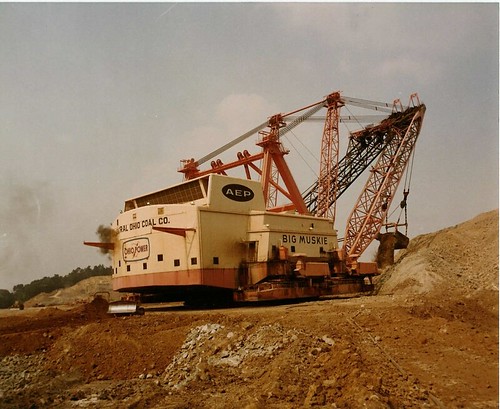
largest Heavy EquipmentBack in 1969 “The Big Muskie” was considered the largest self-propelled piece of machinery in operation. It could move 39 million pounds of earth every hour; uncover coals seams up to 150 feet into the earth’s crust; and could “swing its boom” 600 feet across the landscape. It was shut down in 1991 and only its enormous metal bucket remains. It is now a roadside attraction in Reinersville, Ohio.
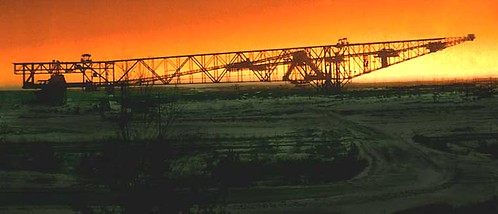
In Lichterfeld, Germany lived another “biggest” moving man-made machine. This machine was called the Overburden Conveyor Bridge F60 and although it weighed only 11,000 tons, its length was an untouchable 1,647 feet. It was also 663 feet wide. It was built in 1991 but only lasted 13 months in operation before being shut down for “energy-political” reasons.

The length of this machine is 100 feet longer than the height of the Sears Tower – that is measures from the base of the building to the tip of the longest lightning rod or antenna.

You may never get to operate one of these giants, but believe it or not the skills acquired in becoming a heavy equipment operator would be sufficient to get you started as an operator of one of these. ATS Heavy Equipment Training School can provide you with the skills required to operate heavy equipment in the mining industry. Can we get you into one of these giants? Probably not, but the equipment that mines do use are pretty impressive when it comes to size.

heavy equipment - Overburden Conveyor Bridge

Read more

Why Is A Backhoe Called A Backhoe?

The backhoe is probably one of the most used pieces of heavy equipment with smaller versions now being used by landscape gardeners. The term backhoe is used to describe a piece of excavating equipment which consists of a digging bucket fixed to the end of an articulated arm.

The backhoe is typically mounted on the back of a tractor with common versions having a small front end loader at the front.

Rather than push earth, the backhoe works by digging the bucket into the earth and dragging it towards the machine. This pulling rather than pushing motion gives the machine a lot of strength and power in relation to its size.

The question was, why is a backhoe called a backhoe? The obvious answer is because the bucket os located at the rear, or ‘back’ of the machine. However, the location of the bucket is not why they are referred to as backhoes. The name is derived from the motion of the digging bucket. As explained, instead of pushing the material forward, the backhoe bucket scoops the earth back toward the body of the machine.

Whatever the reason for the name, they are one of the most used pieces of heavy equipment. ATS Heavy Equipment Training Schools include backhoes in their training regime. To learn how operate one and perhaps start a career as a backhoe operator, visit our site and check out your training options.

Read more

Heavy Equipment Training – Need More Info?

Heavy equipment training is not expensive, but, having said that, it’s not exactly cheap either – unless of course you take up our FREE online training offer. You can’t get any cheaper than that.

To help prospective students in their decisions on heavy equipment training we have put together a FREE information packet that has information on curriculum, job placement assistance, class calendars, pricing, Enrollment/Financial Assistance Applications, and a DVD about heavy equipment and a career as a heavy equipment operator.

These information packs are free to all and are particularly useful for school leavers or those looking for a career change. Being a heavy equipment operator is a demanding yet satisfying career. If you look at employment within the construction industry, or as part of a road/rail building gang, you can look back in years to come knowing that you helped to create that building, road or rail line.

To obtain a free information pack just fill in the online form and we will send one of to you, generally withing 24 hours of you submitting your details. Become a heavy equipment operator and you will gain skills that can be used for life!

Read more

Bulldozers, Excavators and Coal Mining

The excavator and bulldozer play a tag team role in many mining environments, none more so than the coal mining industry. Here they are the kings of heavy equipment virtually running the whole show. All other heavy equipment rely on these two operating effectively.

Excavators are powerful units of heavy equipment designed to chew away at the coal face, taking huge bites. Most excavators rely on one or more conveyor belts to remove the mined material to either large dump trucks or to a huge pile awaiting transport away from the mine.

Bulldozers provide the grunt when it comes to push. Bulldozers collect the excess material from around the excavator. This allows for easier for easier movement around the site. The bulldozer is also ensuring that all the mined coal is heaped up ready for transport.

The work hand-in-hand; one scraping the other pushing. Heavy equipment operators in the coal mining industry may specialize in just one piece of equipment or they may be relied upon to operate several different pieces of heavy equipment. Gaining a cross section of training is always going to be a big plus when it comes to looking fro employment.

At ATS Heavy Equipment Training Schools we endeavor to provide you with that cross section of heavy equipment training to prepare you for employment in a cross section of industries including the coal mining industry.

Read more