Archives for Associated Training Services

Tell Me More About ATS Heavy Equipment Training Schools

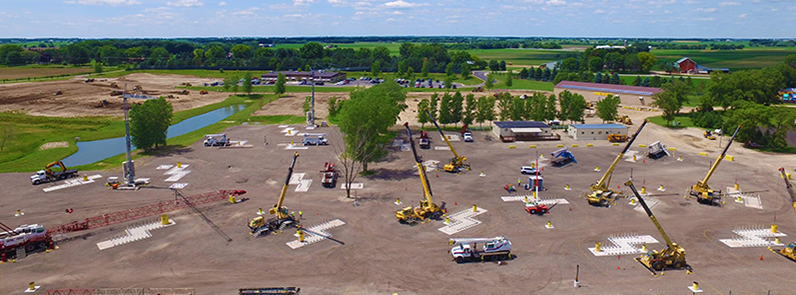
ATS Heavy Equipment Training Schools operate in eight centers around the US;

  • Wisconsin

We provide training either online (free) or at one of our training establishments. The training you can undertake includes:

  • Bulldozers
  • Graders
  • Excavators
  • Trucks

Do undertake training you need to be at least 18 years old and be able to pass a Department of Transportation (DOT) physical.

ATS Heavy Equipment Training Schools also offer a job placement service designed to help individuals who have successfully completed training into a career in the heavy equipment work place.

If you are interested in a career in this industry, contact us for more information.

Read more

So You Think Operating Heavy Equipment Is Difficult?

Think again. If a 3 year old and 4 year old can learn to operate one of these then so can you. The fundamentals of operating a lot earth moving equipment is fairly straightforward. If you have a little co-ordination then the rest comes almost naturally.

What is difficult is learning the dirt. How the dirt will react when pushed, pulled or dug up. Of course there are other technical lessons to be learnt such as reading plans, judging distances and assessing danger. In the meantime – watch this four year old operate this excavator.

If that amazed you then check out this three year old:

If they can do it – so can you – ATS Heavy Equipment Training Schools will be there with you all the way.

Read more

Using Heavy Equipment On A New Farm Site

Here is the scenario. A young couple have purchased their first 100 acre farm and they are ready to build and plant. They call you in with your bulldozer and here is what they need.

  • Dig out a dam or 2
  • Cut a road
  • Clear a house pad
  • Put in spoon drains
  • Push over trees up to 18″ diameter
  • Clear scrub,mainly head high bushes
  • Push trees,scrub into windrows

That’s easy. How about adding the following:

  • sloping,worst being 40 degrees incline/decline
  • clay…rock hard-slushy when wet
  • grassy paddocks-sparse trees-thick head high shrubbery

Often that is all the information you get when going to a job, oh and the time allowed to get it all completed. Are you up to the task? Are you ready to start that career in heavy equipment?

If you answer yes to that last question then climb on board the training rollercoaster and start your heavy equipment operator career today.

Read more

Do You Have A Critical Lift Plan?

Most people looking at that title would be wondering what I am talking about. However, if you are in the construction industry you will possibly know what it means.

Critical lifting of course relates to cranes and how they lift objects. They are ‘critical’ in certain circumstances. For instance when a particular lift with an overhead crane requires substantial planning due to:

  • Load weight or size constraints
  • Tight travel paths
  • Risk to surrounding equipment or
  • Risk to personnel

Under those circumstances a critical lift plan may be in order. The critical lift plan is put together so that a work team knows exactly what they are doing at any given time. The plan maps out:

  • load limitations
  • path sketches
  • team member assignments
  • emergency procedures

Without a critical lift plan you can guarantee that something will go wrong. Crane operation is a highly technical position which requires good training in the basic. You can get that basic training at ATS Heavy Equipment Training Schools.

Read more

The Challenge Of Operating Heavy Equipment

Being a heavy equipment operator can be a real challenge. No matter how experienced you are, you are always going to come across situations that are a little tricky or even a total challenge.

Working on slopes has often been the biggest challenge facing any heavy equipment operator. If you can image standing on a slope with a shovel in your hand trying to dig a straight and level hole. It’s not easy.

Using a bulldozer on a slope has it’s own set of difficulties. Using a grader on a slope has a different set of difficulties. What they both have in common is the one fear that crosses every heavy equipment operators mind and that is rolling over.

Handling a rollover can be a terrifying experience. With today’s modern equipment the operator is fairly safe. What is often difficult it getting that piece of equipment back on to its feet ready to operate again – if that is it’s not to damaged.

Heavy equipment operation comes with its own challenges. They are however a lot of fun to operate and it all starts by getting some accredited training. Follow this up with some on the job experiences and your ready to tackle the best and worst of any job required by a piece of heavy equipment.

If this is where your career lies then check out ATS Heavy Equipment Training Schools for heavy equipment training.

Read more

Don’t I Need Experience To Operate Heavy Equipment?

Of course you do – and training too – and we provide both. For an employer it is a catch 22 situation. They obviously want experienced heavy equipment operators, however if every employer took that attitude there would be no new blood coming into the trade.

Heavy equipment operators held about 416,000 jobs in 2002 and jobs were found in every section of the country and were distributed among various types of operators.

Job opportunities for heavy equipment operators are expected to be good through 2012 so new operators are constantly in demand. What is important is that what once you finish your training, you consider every job as an extension of that training – that is – you continue to learn on the job.

About three out of five heavy equipment operators work in the construction industry with many of them involved in heavy construction, building highways, bridges, or railroads. About one out of five Others – mostly grader, bulldozer, and scraper operators – work in mining. Some also work in manufacturing and for utility companies. Less than one in twenty construction equipment operators were self-employed.

With that information, it is obvious there is a call for skilled heavy equipment operators. The only way to gain those skills is through training at ATS Heavy Equipment Training Schools.

Read more

Do You Have A Head For Heights – Crane Operator Heights That Is

Crane operators move large and heavy materials and equipment. They may operate different types of cranes such as mobile and tower cranes. They are required to operate various types of cranes to lift, move and load large or heavy pieces of equipment or materials.

crane operatorOperators may also carry out routine daily maintenance of equipment. Crane operators must wear protective clothing such as a safety helmet, ear protectors and outdoor wear. As well as having a good head for heights, crane operators must be alert at all times.

As a crane operator you will need excellent judgment, a practical approach and good concentration. It is also vital to be safety conscious and teamwork is important. Mechanical skills are useful for the basic servicing of equipment.

You need to be physically fit as you must climb to reach the cab. In some cases this might be several hundred feet. You also need good eyesight.

To gain training to become a crane driver, visit ATS Heavy Equipment Training Schools for more information.

Read more

World’s Biggest Bulldozer – Heavy Equipment Operators Dream

If you have a dream of one day driving a piece of heavy equipment like a bulldozer, then feast your eyes on this beauty. You can see a photo of the unit at vincelewis.net.

This unit was built by the Italian Company Umberto Acco in 1980 however it has never been put to work. At 183 tons it certainly fall into the realm of heavy equipment. It is powered by two 675 HP Caterpillar engines, has a blade that is 23 feet wide and 9 feet high and a ripper at the rear that is over 10 feet in height.

You may never get to operate a piece of heavy equipment as large as this, however there are some large bulldozers around waiting for the right person to jump into the operators seat. Is that you?

If you are looking for a career as a heavy equipment operator then look no further. ATS Heavy Equipment Training Schools have the right courses to get you started – they also have career placement services as well. Your career starts with your first inquiry.

Read more

Interested In Your Own Heavy Equipment Business?

Once you get your qualified as a heavy equipment operator, and once you have several years experience under your belt, you may want to buy your own piece of heavy equipment and work as a sub contractor. That is quite possible but there are many pitfall to such an undertaking.

The first problem you will face is simply getting the work. There are times when you can submit a tender, however generally speaking you will need to apply directly to building contractors for work. The only way to secure any regular contracts is by building contacts. You will need to get your name out there as a reliable heavy equipment contractor – reliable in getting the job done, reliable heavy equipment and reliable in reporting and getting the paper work done.

The second problem you will need to consider is the lack of income during quite times or when your heavy equipment is ‘off the road’ for maintenance or repair. You need to learn to put aside in the ‘good times’ for the ‘bad times’. You also need to have a contingency plan in place in case your heavy equipment breaks down part way through a job. In these circumstances, you may well lose money (if you have to hire a vehicle), however your reputation is just as important and often worth the loss – you just need to be prepared for these events.

The final problem relates to the admin side of things. Most outdoor workers have little knowledge of bookkeeping and related issues. Can you produce invoices and statements when they are due. Can you manage your finances to cover heavy equipment loan payments, insurance, fuel and maintenance? Can you chase up outstanding payments without upsetting contractors (you may need them for future work)?

These are all issues that need to be considered when establishing your own heavy equipment business. And I have only touched on some of the issues. Other issues such as taxation and licensing also need to be considered. Compare all this to simply working your job and collecting a regular pay check. It is up to you and the rewards can be great when you are your own boss – just be sure to check it all through thoroughly.

Why not look into a heavy equipment school today and start on the road to self employment?

Read more