
Do You Have A Head For Heights – Crane Operator Heights That Is

Crane operators move large and heavy materials and equipment. They may operate different types of cranes such as mobile and tower cranes. They are required to operate various types of cranes to lift, move and load large or heavy pieces of equipment or materials.
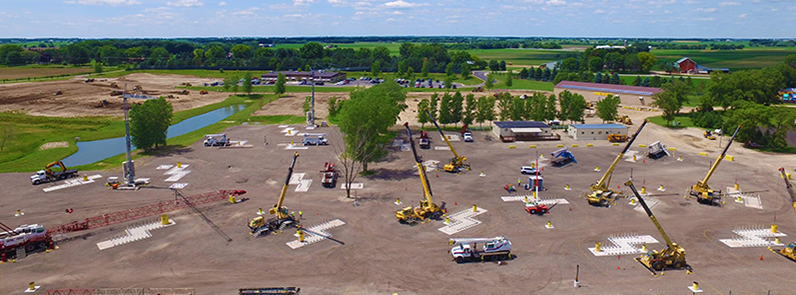
crane operatorOperators may also carry out routine daily maintenance of equipment. Crane operators must wear protective clothing such as a safety helmet, ear protectors and outdoor wear. As well as having a good head for heights, crane operators must be alert at all times.

As a crane operator you will need excellent judgment, a practical approach and good concentration. It is also vital to be safety conscious and teamwork is important. Mechanical skills are useful for the basic servicing of equipment.

You need to be physically fit as you must climb to reach the cab. In some cases this might be several hundred feet. You also need good eyesight.

To gain training to become a crane driver, visit ATS Heavy Equipment Training Schools for more information.
Read more

World’s Biggest Bulldozer – Heavy Equipment Operators Dream

If you have a dream of one day driving a piece of heavy equipment like a bulldozer, then feast your eyes on this beauty. You can see a photo of the unit at vincelewis.net.

This unit was built by the Italian Company Umberto Acco in 1980 however it has never been put to work. At 183 tons it certainly fall into the realm of heavy equipment. It is powered by two 675 HP Caterpillar engines, has a blade that is 23 feet wide and 9 feet high and a ripper at the rear that is over 10 feet in height.

You may never get to operate a piece of heavy equipment as large as this, however there are some large bulldozers around waiting for the right person to jump into the operators seat. Is that you?

If you are looking for a career as a heavy equipment operator then look no further. ATS Heavy Equipment Training Schools have the right courses to get you started – they also have career placement services as well. Your career starts with your first inquiry.

Read more

Interested In Your Own Heavy Equipment Business?

Once you get your qualified as a heavy equipment operator, and once you have several years experience under your belt, you may want to buy your own piece of heavy equipment and work as a sub contractor. That is quite possible but there are many pitfall to such an undertaking.

The first problem you will face is simply getting the work. There are times when you can submit a tender, however generally speaking you will need to apply directly to building contractors for work. The only way to secure any regular contracts is by building contacts. You will need to get your name out there as a reliable heavy equipment contractor – reliable in getting the job done, reliable heavy equipment and reliable in reporting and getting the paper work done.

The second problem you will need to consider is the lack of income during quite times or when your heavy equipment is ‘off the road’ for maintenance or repair. You need to learn to put aside in the ‘good times’ for the ‘bad times’. You also need to have a contingency plan in place in case your heavy equipment breaks down part way through a job. In these circumstances, you may well lose money (if you have to hire a vehicle), however your reputation is just as important and often worth the loss – you just need to be prepared for these events.

The final problem relates to the admin side of things. Most outdoor workers have little knowledge of bookkeeping and related issues. Can you produce invoices and statements when they are due. Can you manage your finances to cover heavy equipment loan payments, insurance, fuel and maintenance? Can you chase up outstanding payments without upsetting contractors (you may need them for future work)?

These are all issues that need to be considered when establishing your own heavy equipment business. And I have only touched on some of the issues. Other issues such as taxation and licensing also need to be considered. Compare all this to simply working your job and collecting a regular pay check. It is up to you and the rewards can be great when you are your own boss – just be sure to check it all through thoroughly.

Why not look into a heavy equipment school today and start on the road to self employment?

Read more

Three Skills Required To Be Called A Heavy Equipment Operator

It is easy to call yourself a grader operator, or a bulldozer operator. There are three areas of knowledge that are required to really call yourself a heavy equipment operator.

You have to know how to run the machine.
In other words, you need to know what all the levers do; how to make it move and function; go forward and backwards; how to turn. In simple terms: You need to know how to drive the heavy equipment.

You have to know how to work the machine.
Driving and working are two different things. Knowing how to move a blade up and down is one thing, knowing how far down and much earth will be cut is another. It takes skill and practice to understand exactly what your heavy equipment is capable of.

You need to know the dirt.
Once you know how to drive, and know how the heavy equipment works, you now need to know the dirt. How hard is it? How much effort will it take to move it? How much can I cut? If you try to do to much, you could damage the machine. If you do too little, you will take too long to complete the job.

These are three related heavy equipment skills that are essential to complete any job. Are you skilled in all three areas. If not then see call ATS Heavy Equipment Training School – we can help you gain those skills.

Read more

Everything Depends On A Heavy Equipment Operator

If you decide to take on a career as a heavy equipment operator then you need to be ready to accept the responsibility of the position.

Every depends on the heavy equipment operator doing their job and doing their job effectively. In fact it all starts with the operator actually turning up for work – trust me – I have seen days lost simply because a grader operator didn’t show up for work.

Having the right training and being able to complete a job according to plan is the second major area of responsibility. Most construction teams have a set plan that includes the what and when of a job. As a heavy equipment operator you are expected to get your part of the job done on time so that the rest of the team can continue the job smoothly.

Being a heavy equipment operator has a high level of responsibility. Anyone can use a shovel, not everyone can use a bulldozer to shift a boulder. Receiving the right training will give you the skills to not only operate a piece of heavy equipment, it will also give you the skills to know how to tackle a given job to complete the task on schedule.

Heavy equipment operator training through ATS Heavy Equipment Training Schools will give you that range skills required to complete the job.

Read more

A Short History Of The Bulldozer

Bulldozer’s have been around since the early 1920’s and were one of the concepts behind the design of the first military tank.

The first bulldozer was a modified Holt farm tractor. Once their versatility and ability to move earth (as against plowing) they grew quickly in popularity. The design transformed from that farm tractor into what we see today, bulldozers with caterpillar traction and a variety of blades and tools for moving earth, shifting boulders and removing tree stumps.

Originally known as bull graders, the term bulldozer came into effect in the early 1930’s – one of the early definitions was “bulldozing” which meant using a big force to push over or through any obstacle – hence the name bulldozer.

To quote from Wikipedia:

By the 1920s, tracked vehicles became common, particularly the Caterpillar 60. To dig canals, raise earth dams, and do other earthmoving jobs, these tractors were equipped with a large thick metal plate in front. This metal plate (it got its curved shape later) is called a “blade”. The blade peels layers of soil and pushes it forward as the tractor advances. Several specialized blades have been developed: for high volume loads such as coal, rakes to remove only larger boulders, or blades with razor sharp edges to cut tree stumps. In some early models the driver sat on top in the open without a cabin.

From the humble farm tractor grew the mighty bulldozer and where would we be today without them. The millions of man hours they have saved by doing mechanically in one day what often took weeks for a team of laborers to achieve.

A career as a bulldozer operator is a satisfying one, particularly as you drive down a highway and say to your children, ‘I helped build this road’. ATS Heavy Equipment Training Schools can help you achieve a career as bulldozer operator.

Read more

If Your Heavy Equipment Is Safe Then So Are You

Safety is one of the most important requirements in any work place and is even more important when operating any form of heavy equipment. The operators safety is important, however there are often many other people in close proximity and their safety is of equal importance.

One area of safety that needs to be addressed during training is your heavy equipment and the pre-shift safety checks that must be carried out prior to starting any job. Along with the pre-shift safety checks, the operator needs to constantly aware of the heavy equipments operations ensuring that any possible safety issues are immediately addressed.

If you do not receive training in these areas then you are not going to know which safety check are required or what to look for when making an inspection. There are legal requirements to safety checks and in states where operator licenses are required, testing of your safety knowledge will undertaken prior to you receiving an operators license.

ATS Heavy Equipment Training Schools pride themselves on the thoroughness of their training including all safety aspects. Students who pass through the school have the required knowledge to pass safety examinations where required for licensing. If you are keen to undertake a career in heavy equipment operations then you can be assured of the training through ATS Heavy Equipment Training Schools.

Read more

Graders Provide The Finishing Touch

Graders are a reasonably simple machine when it comes to design and function. At least, that’s what it looks like to an untrained eye. The grader is one of the most important pieces of equipment to a road building crew.

The action of the grader is to use an angled blade that scrapes the surface and, through the angle of the blade, force the excess material to the side of the vehicle. The blades angle can be altered along with the depth of the scraping blade.

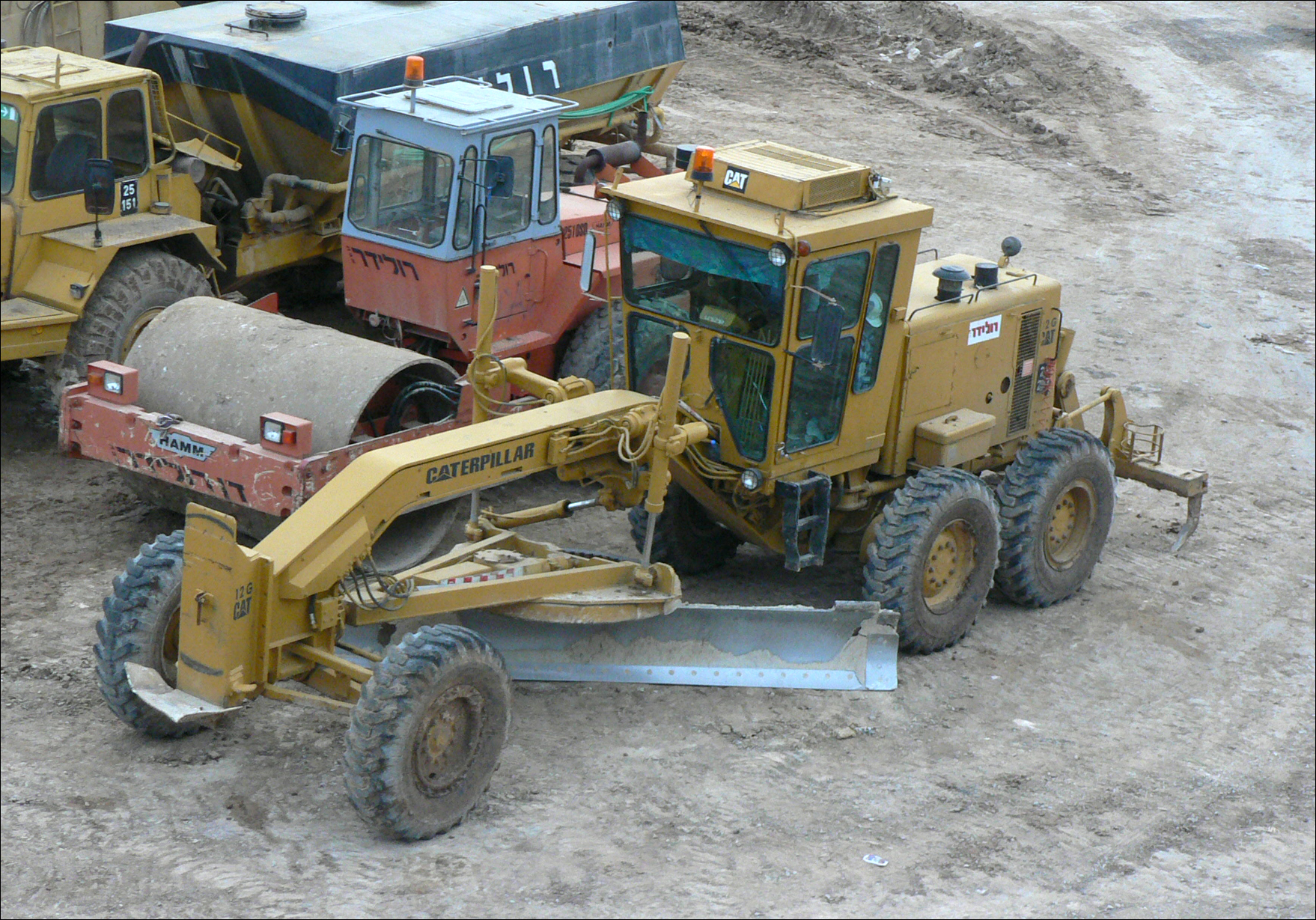
grader training at ATSN Heavy Equipment Training SchoolAfter all the work has been done, clearing rocks, tree stumps and other debris, the grader comes in to provide a level foundation for the proposed road surface. This is done by driving over the proposed road in several passes, each pass scraping more and more until the surface is not only level, but has the required to camber for the proposed road. [photo MathKnight cc WikiCommons Gallery]

Away from the road crew, graders have been used to clear snow from roads. The angled blades push the snow off the road surface and to road verges. At time of heavy snow falls, an essential piece of equipment to keep our roads open.

The attached picture shows a typical road crew with a grader, heavy roller and water truck. Working as a grader operator is a real team job. Bulldozer operators remove the excess heavy material. Grader operators clean the surface and provide a level base. The combination of watering and heavy roller create a packed solid base ready for the road building material.

If the opportunity to work as part of a team to build and maintain our highways sounds attractive, consider a career as grader operator. Professional grader training through ATS Heavy Equipment Training Schools could open those doors for you.

Read more

What Is A Construction Worker

Construction equipment operators use heavy equipment to move construction materials, earth, and other heavy materials at construction sites and mines. They also operate heavy equipment to clear and grade land in preparation for the construction of roads, buildings, and bridges.

As a construction worker you may also be required to use machines to dig trenches to lay or repair sewer and other pipelines and hoist heavy construction materials. There is also the opportunity to work offshore constructing oil rigs

Before commencing a days work, you may also be required to set up and inspect the equipment, make adjustments, and perform some maintenance and minor repairs. Heavy equipment operators control equipment by moving levers, foot pedals, operating switches, or joysticks all of which require good coordination and of course, training.

Construction equipment can be more complicated to use than it was in the past due to the introduction of new technology such as Global Positioning System (GPS) which is now being used to help with grading and leveling activities.

Does this sound appealing to you. If so you should consider training as a heavy equipment operator through ATS Heavy Equipment Training Schools.

Read more